
The Illusion of Mobile Productivity
I’ve spent a lot of time lately trying to optimize my "on-the-go" workflow. With the power of modern chips, we’re told our phones are basically pocket-sized supercomputers. But after a week of trying to get real work done from a 6.7-inch screen, I’ve come to a conclusion: mobile productivity is largely an illusion.
We aren't actually getting more done; we’ve just made ourselves more accessible to noise.
The messaging sinkhole
The smartphone is a communication device first and a production tool second. This is the core of the illusion. We often mistake "responding to people" for "making progress."
A "quick question" on Slack or WhatsApp often spirals into an hour-long ping-pong match of half-formed thoughts. On mobile, we tend to chat around a problem rather than solving it. Ten minutes of focused, synchronous conversation at a desk beats five hours of intermittent buzzing in your pocket every single time.
Interaction without an agenda is just noise. If a thread goes past three messages, I’ve learned to stop typing. It’s better to timebox a response for later or schedule a 5-minute talk with a clear goal than to let a discussion stretch across an entire afternoon.
The typing tax on communication
Because we are stuck with thumb-typing on glass, the "cost" of every word is higher. While a decent typist hits 60-80 WPM on a physical keyboard, mobile users average closer to 38 WPM.
This lag creates a specific kind of friction: we either write overly brief, cryptic messages that lead to more follow-up questions, or we spend way too much time "performing" the act of typing. On a computer, I have strong muscle memory and system-wide shortcuts to move information instantly. On mobile, I’m a hunter-gatherer, poking at glass and praying autocorrect doesn't destroy my point.
Screen real estate is cognitive load
Effective interaction usually requires context—looking at a spreadsheet, a spec, or a codebase while you reply. On a phone, "multitasking" is just "fast switching."
Every time you swap apps to check a reference just to answer a chat, you lose a fraction of your working memory. You aren't seeing the whole picture; you’re looking through a keyhole. This makes your "productive" chat sessions shallow because you can't easily verify the data you’re discussing.
Retrieval friction
Searching for a specific file or a snippet of text on mobile is a chore. Mobile OS file management is still "sandboxed" and restrictive compared to a desktop environment.
What takes two seconds with a global search on a laptop takes twenty seconds of tapping through folders and "Share Sheet" menus on a phone. When you’re in a high-speed chat, this lag makes you less helpful. You end up saying "I'll check when I'm back at my desk"—which proves that the mobile interaction was, in fact, an interruption rather than work.
The focus minefield
Even if you have the best intentions to "just answer one message," the OS is designed to pull you elsewhere. Notifications on mobile are more visceral—they vibrate in your hand, demanding physical attention.
Recent data for 2026 suggests the average adult now spends over 4 hours a day on their smartphone. It’s hard to maintain a logical thread of thought when your environment was built for dopamine loops and doomscrolling.
Final thoughts
My phone is a great tool for triage, not execution. I use it to scan for emergencies, delete spam, and capture raw ideas in my notes.
But for the heavy lifting—the complex planning and the deep work—the laptop remains king. Don't let the convenience of a pocket-sized screen fool you into thinking you're being efficient. Sometimes, the most productive thing you can do on your phone is put it in another room.
Keep Reading
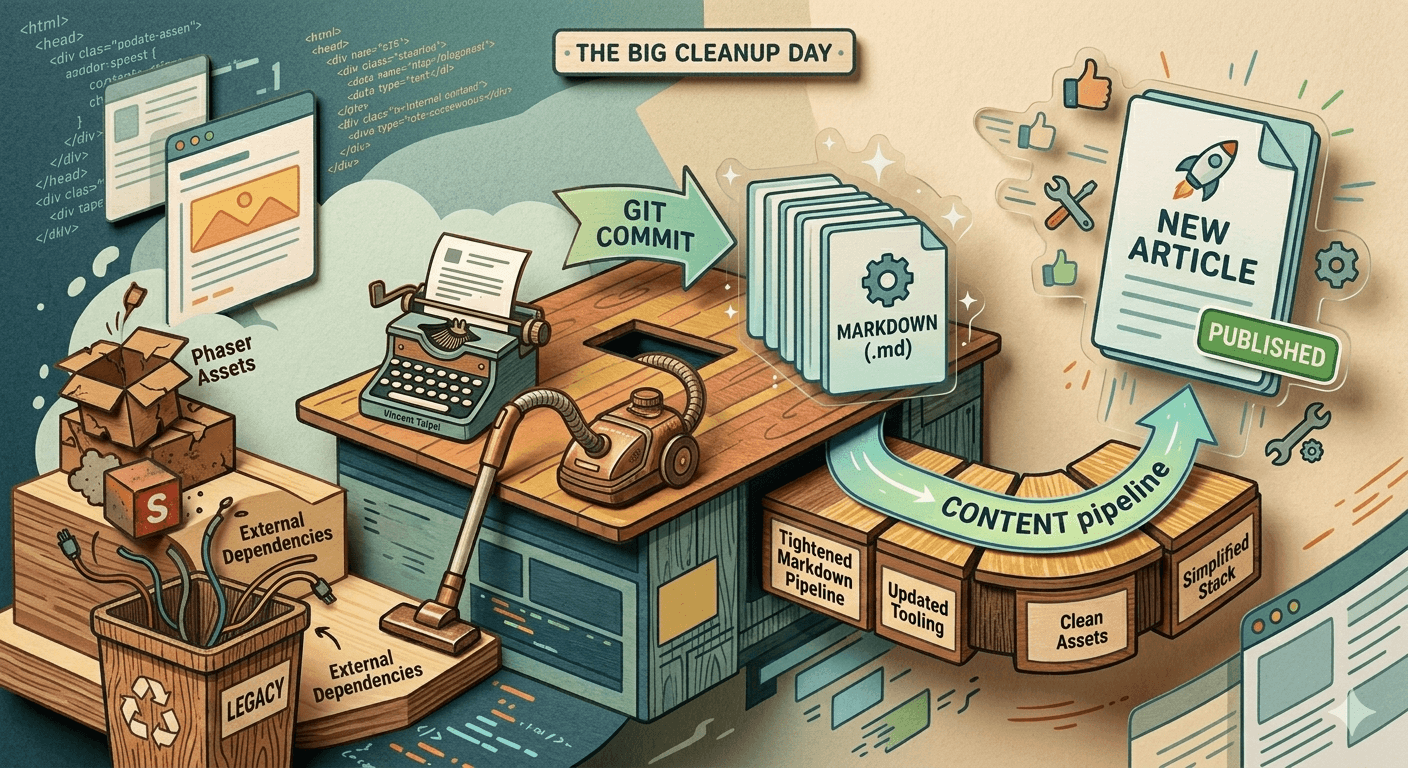
A big cleanup day for this blog
April 11, 2026 | Today I migrated the blog away from Sanity, tightened the Markdown pipeline, cleaned old assets, updated tooli...
Learn More
Calling Hong Kong Bus API for my morning commute
August 9, 2025 | Final result - click here. Hey everyone! Living in Hong Kong, my morning commute relies on catching the right ...
Learn More